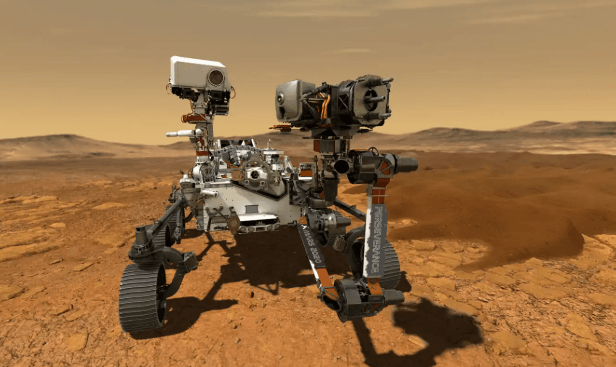

Mars exploration hinges on reliable power, life support, robotics, and scalable autonomy. Propulsion and advanced systems promise shorter transits and higher cadence, while autonomy extends reach beyond direct human control. Habitats and in-situ resource utilization enable longer stays with reduced Earth dependence. The interplay of intelligent decision loops and instrument-robot coordination shapes resilient missions. As these capabilities converge, critical questions emerge about safety, ethics, and operational limits that demand careful consideration.
What Tech Unlocks Mars: Foundational Capabilities
A robust set of foundational capabilities underpins Mars exploration, centering on reliable power, life support, robotics, and autonomous systems.
The framework enables sustained, open-ended inquiry with scalable infrastructure.
Reusable launch reduces upfront costs and cadence, while advanced propulsion expands mission options and responsiveness.
This landscape fosters freedom-driven progress, emphasizing reliability, interoperability, and disciplined experimentation to unlock longer, safer, more ambitious itineraries.
Propulsion and Power: Moving Faster, Getting There Smarter
Propulsion and power systems are the engines behind faster, smarter Mars missions, enabling shorter transit times and more resilient operations. Electromagnetic propulsion concepts, though experimental, promise higher specific impulse and reduced fuel mass for bold missions. Advanced batteries support sustained operations on arrival and during surface phases, driving robustness. Power architecture will emphasize safety, efficiency, and rapid mission provisioning for ambitious exploration trajectories.
Autonomy and Robotics: Hearts and Hands on the Red Planet
Autonomy and robotics stand at the forefront of Mars exploration, integrating intelligent systems with dexterous manipulation to extend mission reach and resilience. This examination evaluates autonomous decision loops, error tolerance, and coordination between instruments and rovers, emphasizing autonomy ethics and safety.
Progress hinges on robust perception, adaptive planning, and robotic dexterity, balancing freedom to operate with disciplined control for sustainable, scalable exploration.
Habitats, ISRU, and In-Situ Resource Utilization: Living Off the Land
Habitat design and In-Situ Resource Utilization (ISRU) converge to enable sustained presence on Mars by reducing Earth supply dependence and expanding mission longevity.
The analysis highlights habitat design insights, efficient life support, and robust safety margins, while resource extraction ISRU and in situ utilization unlock local materials for construction, fuel, and maintenance, driving autonomous, resilient, freedom‑oriented exploration.
See also: Microservices Architecture Explained
Frequently Asked Questions
How Will Humans Adapt to Martian Dust and Radiation Exposure?
Dust mitigation and radiation shielding will shape adaptation, as humans employ engineered habitats, suits, and operational protocols. Analysts anticipate robust materials, active suppression systems, and autonomous monitoring to minimize exposure, enabling sustainable activity while preserving autonomy and exploratory freedom.
What Are the Long-Term Health Risks of Extended Mars Missions?
Mars missions face long term health risks including radiation exposure, bone density loss, neurocognitive decline, and extended mission effects under martian gravity; monitoring is essential to mitigate risks while supporting autonomy and freedom during exploration.
Can In-Situ Resources Fully Support Life Support Systems?
In situ resources could largely sustain life support, but uncertainty remains about full closure. Habitat sustainability hinges on resource utilization efficiency, redundancy, and recovery rates, with ongoing analysis required to determine long-term viability for autonomous Mars operations.
What Legal and Ethical Issues Govern Mars Exploration?
Legal and ethical issues governing Mars exploration involve patent ownership and liability allocation; this anticipates objections about open science, yet analysis favors clear frameworks enabling responsible innovation, shared accountability, and forward-looking governance that respects freedoms while mitigating risks.
How Will Communication Delays Affect Mission Decision-Making?
Communication latency shapes timing; mission control relies on autonomous decision making for critical tasks, while delays necessitate robust onboard autonomy, predictive planning, and resilient fault handling to maintain safety, progress, and operational freedom in distant Mars operations.
Conclusion
Mars exploration advances hinge on integrating propulsion, power, autonomy, robotics, habitats, and in-situ resource utilization. This synthesis enables faster transit, smarter operations, and sustainable presence on the red planet. As intelligent systems handle routine tasks and harsh environments, human missions can focus on science, discovery, and ethical stewardship. Will continued investment in reusable propulsion, autonomous systems, and ISRU unlock reliable, long-term Mars capabilities that redefine interplanetary exploration? The path is analytic, forward-looking, and imperative.


 By
By