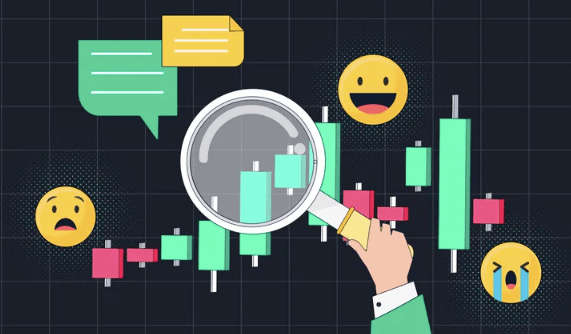

Crypto trading psychology examines how emotions shape risk judgments, timing, and position sizing. Fear amplifies drawdowns; greed inflates valuations and premature exits. A disciplined routine curbs impulse and exposes biases through structured checks. Systematic frameworks quantify risk, test hypotheses, and deter overtrading. The pursuit is a reproducible, data-driven approach rather than anecdotes. Yet gaps persist between belief and behavior, leaving practitioners with unresolved questions about where psychology ends and strategy begins.
How Emotions Drive Crypto Decisions
Emotions exert a measurable influence on crypto trading decisions, shaping risk assessments, timing, and asset selection in ways that tend to deviate from purely logical models.
The analysis focuses on Fear vs. greed, where bias skews valuation and discipline.
Traders battle FOMO control, documenting patterns, quantifying impact, and emphasizing disciplined limits to preserve strategy integrity and systemic skepticism.
Building a Trading Routine to Reduce Impulse
A disciplined trading routine anchors decision-making by reducing impulse and exposing bias to repeated testing. The protocol emphasizes discipline rituals and structured cognitive checkpoints, ensuring decisions occur after data review rather than momentary urge.
Practitioners maintain documentation, pre-trade criteria, and post-trade reflections, enabling objective evaluation. This framework supports autonomy while limiting emotional contagion, aligning behavior with testable hypotheses and transparent performance metrics.
Biases That Eat Profits (and How to Counter Them)
Biases erode profits by skewing perception of risk, reward, and probability beyond what the data support.
Systematic evaluation shows overtrading triggers premature exits and capital erosion, while memory biases distort past outcomes into misleading confidence.
A disciplined framework, objective metrics, and preplanned risk controls counter these distortions, enabling a freer, data-driven approach to allocation, timing, and portfolio diversification without emotional drift.
Practical Mental Skills for Calm, Consistent Risk Management
Calm decision making rests on structured checks; performance is judged by reproducible metrics, not fleeting confidence, enabling freedom through disciplined autonomy.
See also: Marketing Technology Trends to Watch
Frequently Asked Questions
How Can I Measure My Trading Psychology Progress Over Time?
A precise method exists: track consistency and emotional awareness over time. The method emphasizes objective metrics, periodic reviews, and skeptical interpretation of fluctuations. Data-driven dashboards quantify discipline, while qualitative notes reveal how emotions influence decisions for freedom-focused traders.
What Role Does Sleep Quality Play in Decision Making?
Sleep quality influences decision making; poor sleep degrades cognitive performance, while sleep hygiene supports consistency. Data suggests modest gains in vigilance, risk assessment, and impulse control, appealing to individuals seeking freedom through disciplined, skeptical, rigorous self-monitoring of sleep.
Can Social Media Affect My Market Decisions or Biases?
Social media can influence decisions, amplifying market biases through influencer hype and emotional trading. The data show elevated reaction times and framing effects, warranting skepticism; individuals seeking freedom should rely on objective metrics rather than social feeds.
How Do Tax Considerations Impact Trading Psychology and Risk?
Tax planning shapes trading psychology through measurable risk adjustments and anticipated liquidity constraints; behavioral tax effects influence decision thresholds. Data-driven skepticism suggests individuals underestimate tax drag and overemphasize short-term gains, preserving freedom while quantifying tax-driven behavioral biases.
What Are Quick Methods to Rebalance Mindset During Drawdowns?
Calm, composed, counterbalanced: he highlights quick methods to rebalance mindset during drawdowns. He advocates calm breathing, situational awareness, structured pauses, cognitive reframing, and data-driven checks, skeptical of hype, seeking freedom through disciplined, dependable decision-making under pressure.
Conclusion
Crypto trading psychology reveals that emotions consistently distort risk assessment and timing. A disciplined routine, with explicit pre- and post-trade reflections, mitigates biases more reliably than intuition alone. Systematic metrics—drawdown limits, position sizing, and probabilistic expectations—act as guardrails against overtrading and impulsive exits. Bias-awareness training complements this by exposing heuristics in real time. The framework functions like a well-calibrated instrument, cutting through noise with measurable decisions. It is, like a compass in a storm, relentlessly data-driven and skeptical.


 By
By