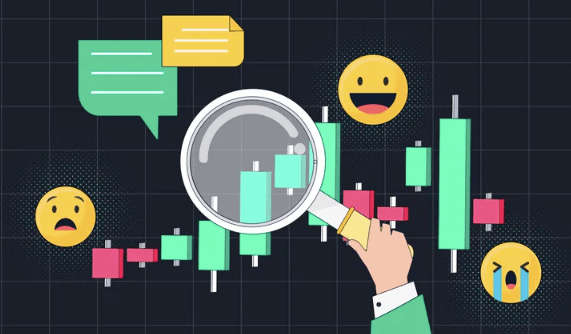

Crypto market sentiment indicators synthesize social chatter, trading activity, and survey data into probabilistic expectations of future moves. They quantify momentum, volatility, and consensus, highlighting pattern symmetry and persistence that underlie trend formation. Signals must be evaluated against transparent data sources and backtested frameworks to avoid overfitting. While useful for risk governance and systematic screening, they require ongoing calibration as market regimes evolve, leaving a practical question: how robust are these signals under stress and shifting participant behavior?
What Crypto Sentiment Indicators Tell You
Crypto sentiment indicators aggregate market mood from diverse sources such as social media, trading volumes, order-book dynamics, and crowd-based surveys. They quantify momentum, volatility, and consensus, translating signals into probabilistic expectations for future moves.
Crypto Trends emerge from pattern symmetry and persistence, while Investor Psychology reflects bias and risk appetite. Interpretations remain probabilistic, guiding disciplined decisions toward freedom within defined risk parameters.
Interpreting Social and Market Signals for Action
Cryptocurrency psychology informs bias assessment; Market momentum gauges trend persistence. Decisions rely on probabilistic thinking, robust backtests, and risk controls, preserving freedom to adapt as data evolve while avoiding overfitting and emotional contagion.
Practical Ways to Use Sentiment in Trading
Practical use of sentiment in trading hinges on converting qualitative mood signals into quantitative rules that can be tested and executed with discipline. Systematic screens translate crypto psychology signals into probabilistic models, prioritizing risk-adjusted edge over hype. Signals align with market expectations, informing position sizing, entry timing, and exit discipline; backtests quantify confidence, while ongoing monitoring maintains adaptive, transparent governance.
Evaluating Reliability and Avoiding Hype
The analysis adopts a critical methodology, emphasizing transparent sources, replication, and probabilistic framing.
It cautions against data pitfalls, including selection bias and overfitting, and emphasizes calibration, peer review, and conservative expectations for market sentiment indicators.
See also: Marketing Technology Trends to Watch
Frequently Asked Questions
Do Sentiment Indicators Work for All Crypto Markets Equally?
Sentiment indicators do not work equally across markets; performance varies with data provenance and sample biases. They exhibit sentiment biases that reshape probabilistic interpretations, requiring cautious extrapolation and context-aware calibration before applying conclusions to diverse crypto markets.
How Quickly Do Sentiment Shifts Translate to Price Moves?
Like a pendulum, sentiment shifts vary; price moves follow with predictive lag and momentum. The answer is probabilistic: sentiment momentum improves timing probabilistically, but rapid translation is not guaranteed and depends on liquidity, event noise, and market structure constraints.
Can Sentiment Data Be Manipulated or Faked?
Sentiment data can be manipulated, though the prevalence is uncertain; studies emphasize low noise and robustness tests. Analysts assess risk via probabilistic models, guarding fake data integrity and quantifying likelihood of misrepresentation in custody, sampling, and aggregation processes.
Which Indicators Are Best for Long-Term Investors?
The best indicators for long-term investors emphasize volatility correlations and social momentum, as they calibrate risk-adjusted probabilities; evidence suggests these metrics capture regime shifts, aiding disciplined allocations while preserving autonomy in uncertain markets.
How Should Beginners Verify Sentiment Sources?
Begins with: Beginners should verify sentiment sources by evaluating credibility and evidence; they should verify source credibility through cross-checking data, transparency, methodology, and track record, while weighing probabilistic estimates and maintaining a disciplined, freedom-oriented analytic stance.
Conclusion
Crypto sentiment indicators synthesize diverse data into probabilistic forecasts of momentum and volatility. When interpreted rigorously, they illuminate persistent patterns and regime shifts without assuming certainty. The prudent approach weights signal strength, corroborates with price action, and continuously calibrates to new data to avoid overfitting. Used as a probabilistic compass rather than a crystal ball, sentiment tools guide disciplined risk management and systematic testing, keeping biases in check as market moods shift—like weather forecasts that improve with more observations.


 By
By